







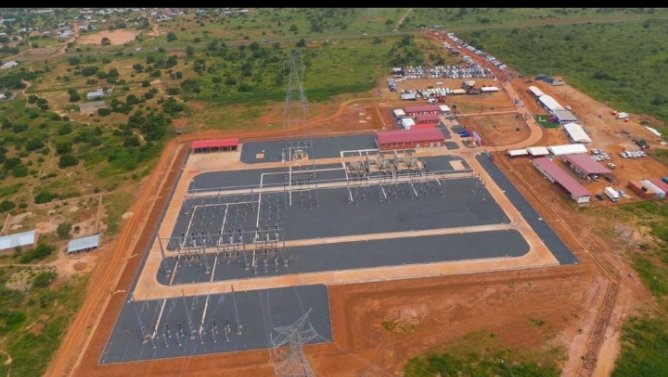
Governments are being urged to accelerate cross-border grids, gas pipelines and power pools as fragmented national systems raise costs and weaken energy security
African governments are facing renewed pressure to deepen regional electricity and gas trade as fragmented national markets continue to limit investment and raise energy costs.
The issue is expected to feature prominently at African Energy Week 2026, where regional integration has been identified as a key condition for delivering affordable and reliable energy.
Ore Onagbesan, Programme Director of African Energy Week, said no African country could solve the continent’s energy challenge in isolation.
She argued that cross-border pipelines, electricity interconnections, regional power pools and integrated markets were necessary to create larger and more bankable opportunities for investors.
Resources and demand are uneven
Africa’s energy resources are distributed unevenly.
Some countries have substantial gas reserves but small domestic markets. Others have significant electricity demand but insufficient generation.
Several countries have strong hydropower potential, while others possess high-quality solar, wind or geothermal resources.
Regional trade could connect these resources with demand across national borders.
A power project that is too large for one market may become viable if it can supply several countries. A gas development can support industries and power stations across a wider region.
Yet many national systems remain poorly connected.
Power pools remain underused
Africa already has several regional power pools, including the West African Power Pool, Southern African Power Pool and Eastern Africa Power Pool.
These institutions provide a framework for electricity trade.
But transmission gaps, weak utilities, different regulations and payment risks continue to limit their effectiveness.
Some countries import and export electricity, but the full potential of regional markets remains unrealised.
The challenge is not merely constructing interconnectors.
Governments must also establish common technical standards, transparent tariffs, settlement systems, enforceable contracts and dispute-resolution mechanisms.
Without these commercial arrangements, infrastructure may remain underused.
Trust is a major obstacle
Regional electricity and gas markets depend heavily on political and commercial trust.
Importing countries need confidence that supply will continue during periods of shortage.
Exporting countries must be certain that they will receive payment.
Investors need assurance that cross-border contracts will survive political change.
These concerns have slowed regional projects even where the economic case is strong.
Governments are often reluctant to export power or gas when domestic consumers face shortages. But unpredictable restrictions can undermine investment and weaken regional energy security.
The challenge is to design agreements that protect domestic interests while maintaining reliable cross-border commitments.
West African gas trade shows potential
The West African Gas Pipeline demonstrates both the value and difficulty of regional energy integration.
The pipeline links Nigeria with Benin, Togo and Ghana, supporting electricity generation and regional gas supply.
However, interruptions and commercial disputes have shown the importance of dependable production, payment security and strong operating arrangements.
Future gas networks will need more diversified supply, clearer pricing and stronger contractual protection.
Regional gas trade could support fertiliser, manufacturing and power generation across West Africa, but only if countries create stable markets.
Integration can lower costs
Regional energy markets can reduce the need for each country to build its own expensive backup capacity.
Countries with surplus hydro, gas or renewable generation can supply neighbours during shortages.
Interconnected grids can also help manage the variability of solar and wind power by drawing on different generation sources across a wider area.
This could improve reliability and reduce generation costs.
For smaller African economies, regional markets may be the only way to attract investment in large power and pipeline projects.
Investors are more likely to finance infrastructure where demand is spread across several markets rather than concentrated in a single small economy.
National reform remains necessary
Regional integration cannot compensate for weak domestic electricity systems.
A financially distressed utility will remain a poor commercial partner even after joining a power pool.
Countries must still address tariffs, revenue collection, transmission losses and regulatory uncertainty.
They also need sufficient domestic networks to distribute imported electricity to businesses and households.
Regional trade must therefore be accompanied by national power-sector reform.
Financing requires stronger guarantees
Cross-border infrastructure is particularly difficult to finance because it involves several governments, currencies and regulatory systems.
Development finance institutions and multilateral lenders can help through guarantees, concessional funding and technical support.
African pension funds, sovereign wealth funds and insurance companies could also provide long-term capital.
But investors will demand policy certainty and contract enforcement across all participating countries.
The engineering case for a project may be strong, but weak governance can still make it unbankable.
AEW seeks project-level talks
AEW 2026 will include country-investment sessions, ministerial meetings, investor forums and private negotiations.
The event is expected to provide a platform for governments, utilities, financiers and developers to discuss cross-border projects.
The challenge will be to move regional integration beyond political declarations.
Projects will need clear timelines, financing plans, regulatory agreements and accountable institutions.
The real measure of progress will be whether new interconnectors, pipelines and trading agreements move towards implementation.
National planning must become regional
African energy policy is still largely organised around national borders, even though the continent’s resources and infrastructure needs are regional.
Gas basins extend across countries. Rivers cross borders. Transmission corridors can serve several markets. Industrial and transport networks are increasingly regional.
Governments will need to adjust their planning accordingly.
Affordable and abundant energy will remain difficult to achieve while national systems operate as isolated and often inefficient markets.
Regional integration will not solve every problem, but it can create larger markets, improve energy security and attract more investment.
AEW 2026 is placing that argument before governments and investors.
The next test is whether political commitment can be converted into functioning regional infrastructure.