









The Centre for the Promotion of Private Enterprise (CPPE) has said the newly imposed 12.5 per cent tariff on Nigerian exports to the United States is unlikely to have a significant impact on the country’s economy, arguing that most of Nigeria’s exports to the U.S. are exempt from the measure.
The Office of the United States Trade Representative (USTR) in a statement issued on 23 July announced a 12.5 per cent tariff on imports from Nigeria as part of a new trade measure targeting countries it says have failed to prohibit the importation of goods produced with forced labour.
Nigeria is among the countries subject to the tariff, while India, Indonesia, Malaysia, Mexico and the United Kingdom will face a lower 10 per cent rate after adopting or committing to implement bans on imports linked to forced labour.
In a policy brief released on Sunday, the Chief Executive Officer of CPPE, Muda Yusuf, said more than 80 per cent of Nigeria’s merchandise exports to the United States consist of crude oil, liquefied natural gas (LNG) and other petroleum products, which are not covered by the new tariff regime.
Related Posts:
- Theatre of War and The World Economic Order; Wither Nigeria – By Ige Asemudara
- Nigeria’s Economic Renaissance: Strategic lessons from Ghana’s remarkable resurgence – By Oyewole O. Sarumi
- FULL TEXT: Dapo Olorunyomi’s lecture at Ajayi Crowther University on Nigerian journalism
- INTERVIEW: Nigerian govt deliberately impoverishing lecturers to kill public education – ASUU President, Piwuna
He noted that while some non-oil exporters, particularly those in the agriculture and manufacturing sectors, may face reduced competitiveness in the U.S. market, the overall impact on Nigeria’s export earnings, foreign exchange inflows and broader macroeconomic performance is expected to be modest.
Why Nigeria faces limited impact
According to the CPPE, the exemption granted to petroleum exports significantly reduces Nigeria’s exposure to the new U.S. tariff.
It explained that crude oil, LNG and other petroleum products account for more than four-fifths of Nigeria’s exports to the United States, leaving only a relatively small proportion of exports directly affected by the tariff.
The Centre also noted that the United States is not Nigeria’s largest export destination.
Citing Nigeria’s first-quarter 2026 merchandise trade statistics, it said the country’s total exports stood at about ₦21.6 trillion, with exports to the United States accounting for only 5.56 per cent.
By comparison, India accounted for 13.09 per cent of Nigeria’s exports during the period, followed by France (9.29 per cent), the Netherlands (9.22 per cent) and Spain (7.68 per cent), placing the United States fifth among Nigeria’s export destinations.
These trade patterns, according to CPPE, substantially limit the country’s vulnerability to the new tariff regime. “This is essentially a question of materiality,” the organisation said.
“The products affected account for only a small proportion of Nigeria’s total exports, while the dominant export category to the U.S. remains outside the scope of the tariffs.”
Continuation of Trump’s tariff policy
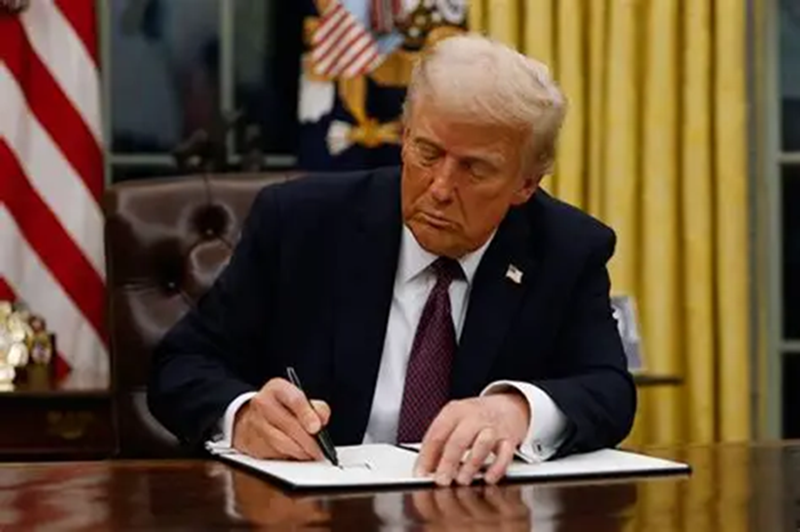
The CPPE described the latest tariff measures as a continuation of the reciprocal tariff policy introduced under the administration of former U.S. President Donald Trump, although implemented under a different legal framework.
According to the organisation, following the judicial invalidation of the earlier reciprocal tariffs, the current measures appear to have been restructured under Section 301 of the U.S. Trade Act, using allegations relating to forced labour as their statutory basis.
It said the legal basis may have changed, but the underlying objective remains largely the same.
“The underlying policy objective remains essentially the same: protecting U.S. domestic industries, strengthening American manufacturing competitiveness and advancing broader U.S. trade and economic interests.”
Growing protectionism
Although the immediate impact on Nigeria is expected to be limited, Mr Yusuf said the tariff reflects a broader shift in global trade towards protectionism and the increasing use of trade policy to advance domestic economic interests.
It urged Nigeria to respond by accelerating export diversification, improving manufacturing competitiveness, increasing domestic value addition and deepening regional trade under the African Continental Free Trade Area (AfCFTA).
The organisation also called on the government to strengthen labour standards, improve supply chain transparency and engage proactively with the United States through diplomatic and trade channels to seek clarity on the implementation of the new tariff measures and minimise any adverse effects on affected exporters.
It added that while concerns over the tariff are understandable, Nigeria’s greater challenge lies not in the immediate loss of export opportunities but in adapting to an increasingly fragmented and protectionist global trading environment.
Source: Development Reporting