





The Nigeria Police Force was linked to 118 of the 219 state-led civic space violations recorded in Nigeria in 2025, accounting for 54 per cent of such incidents, according to a new report by the Wole Soyinka Centre for Investigative Journalism (WSCIJ).
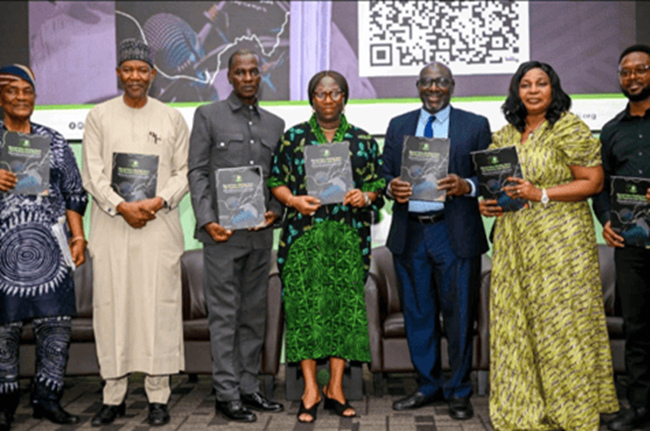
Launched on Monday in Lagos during the 18th WSCIJ Media Lecture, themed ‘Beyond the Ballot: Measuring Democracy Through Security, Welfare, Accountability and Public Trust’, the report, ‘Silenced Voices, Shrinking Space: Civic Freedoms Under Pressure’, documented 245 incidents of civic space restrictions across Nigeria between January and December 2025.
Of the 245 incidents, 219 (89.4 per cent) involved state actors, while 26 (10.6 per cent) were linked to non-state actors. Researchers verified the findings through an analysis of 570 media reports published by 54 media organisations across the country.
Violations largely non-violent
Related Posts:
- FULL TEXT: Dapo Olorunyomi’s lecture at Ajayi Crowther University on Nigerian journalism
- From Borno to Oriire: 2,573 abducted in 31 violent Nigerian school attacks over 12 years
- As Nigeria savours WAFCON, AfroBasket wins, data shows many sportspersons died in road crashes in Q2 2025
- Theatre of War and The World Economic Order; Wither Nigeria – By Ige Asemudara
Reviewing the report at the media lecture, Lekan Otufodunrin, Executive Director of the Media Career Development Network, said 145 incidents (59.2 per cent) involved non-violent methods, including arrests, summons, detention, legal action and regulatory sanctions, while the remaining 100 incidents (40.8 per cent) involved violent methods such as assaults, intimidation, harassment and destruction of property.
Freedom of expression was the most affected civic right, accounting for 172 recorded incidents. While journalists were the most affected group in 2024, the report noted a sharp rise in citizen-related incidents in 2025, suggesting that restrictions on civic space are increasingly extending beyond the media to affect broader public participation.
“The report indicates that civic space restrictions are no longer limited to journalists but increasingly affect ordinary citizens exercising their constitutional rights,” Mr Otufodunrin said.
Underreporting masks extent of violations
Geographically, Abuja and Lagos recorded the highest number of incidents, a trend Mr Otufodunrin attributed to their concentration of political activities, government institutions and media organisations.
He, however, cautioned against interpreting lower figures from other states as evidence of greater civic freedom.
“Low incident numbers in some states do not necessarily mean civic space is unrestricted there. Many cases simply go undocumented,” he noted.
Mr Otufodunrin also identified structural challenges within the media that contribute to underreporting of civic space violations.
According to him, some journalists in certain states receive salaries or other benefits from state governments, creating conflicts of interest that discourage them from reporting attacks on themselves, colleagues or other citizens.
He noted that the growing reliance of many media organisations on freelance reporters, many of whom are only paid when their stories are published, has weakened the media’s capacity to consistently hold public institutions accountable.
The Journalism and Civic Space Status Report is the fourth in the WSCIJ’s annual series tracking civic freedoms and press freedom in Nigeria. The report draws attention to threats facing journalists, civil society organisations and citizens, while documenting patterns of state and non-state actions that restrict civic participation and fundamental rights.
The report was launched during the WSCIJ’s 18th annual media lecture, which brought together journalists, academics, civil society leaders, diplomats and government officials to examine the quality of Nigeria’s democracy beyond the conduct of elections.
Press freedom under pressure
Following the presentation of the report, a stakeholder dialogue on the state of journalism, civic space, democratic accountability and public trust, moderated by Arise News anchor, Ayo Mairo-Ese, brought together experts to reflect on the report’s findings and explore practical ways to strengthen media freedom, civic participation and institutional accountability.
The Executive Director of the International Press Centre (IPC), Lanre Arogundade, decried growing hostility towards journalists from politicians and members of the public who consider tough questions disrespectful. He recalled the 2023 general election, when a female reporter with the African Independent Television (AIT) was assaulted in Ifako-Ijaiye while covering a politician.
According to him, Nigeria spends heavily on surveillance technology, and journalists frequently come under its watch. He revealed that his name remained on a state surveillance watch list for 40 years before it was eventually removed by the Department of State Services (DSS).
“Journalism needs support from civil society and the public to survive current pressures,” he said, adding that the profession still has a promising future, particularly with younger journalists making better use of technology than older generations.
Responding to a question on newsroom training, Umaru Pate, a professor of communication at Bayero University, Kano (BUK), recalled chairing a National Universities Commission (NUC) committee that reviewed Nigeria’s communication and media studies curriculum three to four years ago.
According to him, the review introduced courses in media economics and conflict reporting while promoting greater specialisation among journalism students. He, however, lamented that many lecturers still teach outdated methods and require retraining to keep pace with contemporary journalism practice.
Newsroom pressures threaten editorial independence
The Head of Reportorial at News Central Television, Bernard Akede, said newsrooms continue to face pressure from politicians, advertisers and government agencies that fund their operations, a situation he said undermines editorial independence.
He explained that regulators, including the National Broadcasting Commission (NBC), sometimes fine media organisations over content, with some organisations transferring the financial burden to individual journalists.
Mr Akede also lamented the growing challenge of content appropriation on social media. He recounted how an X (formerly Twitter) account with 4.9 million followers built its audience by reposting his reports and those of other journalists without attribution, despite his own account having about 1,600 followers.
Despite these challenges, he maintained that professional journalists still hold an advantage over citizen reporters through their ability to verify information, even if they are not always the first to break a story.
Source: Development Reporting