









Data shows 4.9 million children need life-saving humanitarian support, yet no federal or state budget specifically provides for early childhood development in crisis settings.
A new report has raised fresh concerns about Nigeria’s investment in its youngest and most vulnerable citizens, revealing that millions of children affected by conflict, displacement, climate shocks and economic hardship remain “fiscally invisible” because neither the federal nor state governments have dedicated budget lines for early childhood development in humanitarian crisis settings.
The report, ‘Financing Early Childhood Development in Crisis (ECDiC) in Nigeria: From Fiscal Invisibility to Child-Level Results’, developed by the Moving Minds Alliance (MMA) in partnership with Whole Child Advisors, was launched on Wednesday during a workshop that brought together journalists and humanitarian partners to discuss early childhood development in humanitarian crises, in Abuja.
It analyses how Nigeria funds, and fails to fund early childhood development for children living through conflict, displacement, climate shocks and economic hardship. Drawing on data from 2020 to 2025, the report found that neither the federal nor state governments maintain dedicated budget lines for children aged between zero and eight years living in crisis settings, making it difficult to track spending, protect funding and hold authorities accountable.
Related Posts:
- FULL TEXT: Dapo Olorunyomi’s lecture at Ajayi Crowther University on Nigerian journalism
- From Borno to Oriire: 2,573 abducted in 31 violent Nigerian school attacks over 12 years
- Makoko, Oworonshoki: Despite safer alternatives to managing informal settlements, Lagos demolitions leave thousands…
- The Price of ‘Free’ Education: How hidden charges push Oyo children out of school
According to the report, which cited the World Bank Human Capital Index, Nigeria stands at 0.36, meaning a child born in the country today is expected to realise only 36 per cent of their productive potential because of persistent gaps in health, nutrition and education.
The event also featured the formal inauguration of the Nigerian chapter of the Reporters for Early Childhood in Humanitarian Crisis (REACH) Network, a global community of journalists committed to advancing evidence-based reporting on young children affected by humanitarian crises.
Mounting humanitarian crisis
Drawing on data from United Nations Children’s Fund (UNICEF), the World Health Organisation (WHO), the World Bank and the United Nations High Commissioner for Refugees (UNHCR) between 2020 and 2025, the report paints a grim picture of the humanitarian challenges confronting Nigeria’s youngest children.
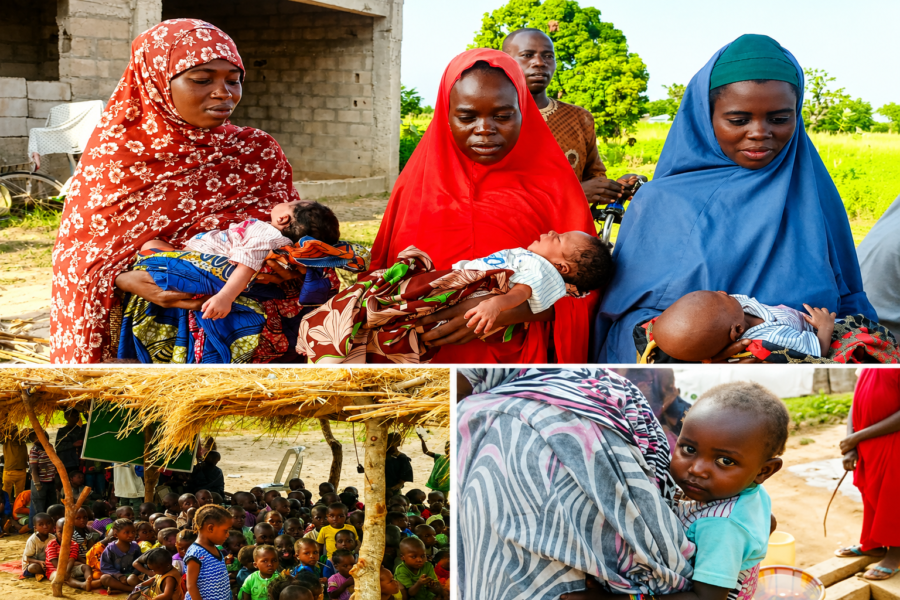
It found that 4.9 million children across the country require life-saving humanitarian assistance, while 3.6 million people had been forcibly displaced as of 2025, with the highest numbers recorded in Borno, Benue and parts of the North-west.
The report also noted that Nigeria has about 31 million children under the age of five, yet between 33.8 and 40 per cent of them are stunted, reflecting the widespread impact of poor nutrition and repeated crises on children’s growth and development.
It further revealed that cases of severe acute malnutrition have risen sharply to about 1.8 million children in 2025, representing a 69 per cent increase over previous estimates.
According to the report, under-five mortality remains high at 105 deaths per 1,000 live births, highlighting the continued risks facing children in the country’s most vulnerable communities.
Despite the scale of the humanitarian crisis facing young children, the report found that Early Childhood Development in Crisis (ECDiC) does not appear as a dedicated budget line in any federal or state budget, leaving children aged between zero and eight years in crisis settings “fiscally invisible.”
Funding gaps
According to the report, the current financing system is designed around institutions rather than children’s needs.
It identified five major obstacles limiting effective investment in early childhood development in humanitarian settings, including the absence of dedicated budget lines, poor budget implementation, fragmented financing channels, excessive spending on recurrent expenditure and unequal distribution of humanitarian resources.
The report noted that less than five per cent of Nigeria’s education spending benefits early childhood development or emergency learning, while only about 1.5 per cent of the health budget is directed towards early-childhood-focused services.
It also observed that federal budget implementation remains weak, with less than 40 per cent of approved expenditure executed in 2024 and only 17.7 per cent of capital funds released by the third quarter of 2025.
The report further found that more than 85 per cent of humanitarian funding is concentrated in Borno, Adamawa and Yobe, leaving crisis-affected communities in the North-west and North-central significantly underserved.
“The system is built to fund structures, not children,” it stated.
It warned that Nigeria would struggle to achieve its human capital ambitions without a financing system that delivers predictable resources directly to frontline service providers and the children who need them most.
Call for reforms
To address the funding gaps, the report proposed seven immediate reforms, including creating a federal policy framework for Early Childhood Development in Crisis, introducing dedicated budget tags across federal and state budgets, protecting budget releases, simplifying funding channels and expanding results-based financing tied to measurable outcomes for children.
It also recommended redirecting investments according to vulnerability rather than convenience and establishing a joint financing architecture combining public, humanitarian and philanthropic funding.
The report envisages that by 2028, federal and state governments would have dedicated ECDiC budget tags, release at least 70 per cent of earmarked funds annually and record measurable improvements in children’s developmental outcomes at the local government level.
Experts seek sustained attention
Speaking during the report’s presentation, the Coordinator of the Nigeria Early Childhood Development in Crisis Coalition, Arome Agenyi, said early childhood experiences largely determine a person’s future potential.
“Behind every successful adult is an early childhood story. The question is not whether children are developing; they are. The question is whether they are developing to their full potential,” he said.
Mr Agenyi urged journalists to prioritise evidence-based reporting capable of influencing government policies and investments for vulnerable children.
Also speaking, the Global Co-Chair of the Reporters for Early Childhood in Humanitarian Crisis (REACH) Network, Mojeed Alabi, warned that children who are invisible in public finance often become invisible in policymaking.
“When children living through conflict, displacement, climate shocks and economic hardship become fiscally invisible, they also risk becoming politically invisible,” he said.
He said the newly inaugurated Nigerian chapter of the REACH Network aims to strengthen media coverage of early childhood issues while holding governments and development partners accountable for their commitments to children in humanitarian crisis settings.
The Interim Director and Co-Chair of Moving Minds Alliance, Katie Murphy, said the report provides the clearest evidence yet of where Nigeria’s investment in young children is falling short and the reforms required to improve outcomes.
She said the findings would inform discussions at the planned Act for Early Years Financing Summit in 2027, where governments, donors and development partners are expected to develop strategies for a financing system that delivers resources directly to vulnerable children.
Author
-
Christiana Alabi-Akande is an award-winning development journalist with over a decade of experience at Daily Trust. She’s a skilled storyteller, passionate about humanitarian service and driving impactful change. She’s also a versatile media professional with proficiency in English, Hausa, and Yoruba. Alabi-Akande currently works as Managing Editor at DevReporting.
Source: Development Reporting