










While one type of IUD may lead to heavier, more painful periods, another can make menstruation lighter or even stop it altogether. When should side effects become a medical concern? This piece separates myths from medical evidence, examines why different IUDs affect women differently, and outlines what every woman should know before choosing the contraceptive method
After giving birth to her third child in 2014, Maryanne Okeke, 40, knew she wanted to space her children. However, she avoided modern contraceptives because of frightening stories she had heard from other women.
Some complained of severe bleeding after using contraceptives. Others said their monthly periods stopped completely. The stories fuelled her fears, making her reluctant to use any childbirth spacing method.
Then, in 2015, she unexpectedly became pregnant again. The pregnancy ended in a miscarriage.
Determined to avoid another unplanned pregnancy, she agreed to have a copper IUD inserted because she believed it was a safer, non-hormonal option. Soon afterwards, her menstrual cycle changed dramatically.
Related Posts:
Every month for nearly a decade, she dreaded the arrival of her menstrual period. What should have been a routine part of her monthly cycle became days of fear, discomfort and exhaustion. The bleeding was so heavy that leaving the house required careful planning.
Eventually, the excessive blood loss left her anaemic. Yet, despite the suffering, she held on to the IUD that had transformed her monthly periods into what she describes as “hell.”
She sought reassurance from other women using the same contraceptive. “Some told me they experienced the same thing. Some eventually removed theirs because they couldn’t bear the discomfort.”
She wanted to do the same but fear kept her from removing it. “I couldn’t remove it because I didn’t want to get pregnant again.” Instead, she endured years of excessive menstrual bleeding until she finally decided enough was enough.
Mrs Okeke’s experience reflects the reality of many women whose menstrual patterns change significantly after using certain types of IUDs. While some experience lighter, shorter periods, others battle prolonged and unusually heavy menstrual bleeding that affects their health, work and quality of life.
Mr Tony Olushola, an ex-bank staff in Abuja told DevReporting in a chat that his wife also experienced heavy bleeding after inserting an IUD. “Her period became very heavy and it became a worrisome situation. At one point she felt dizzy after her menstrual flow, so she removed it and got better,”
What is IUD?
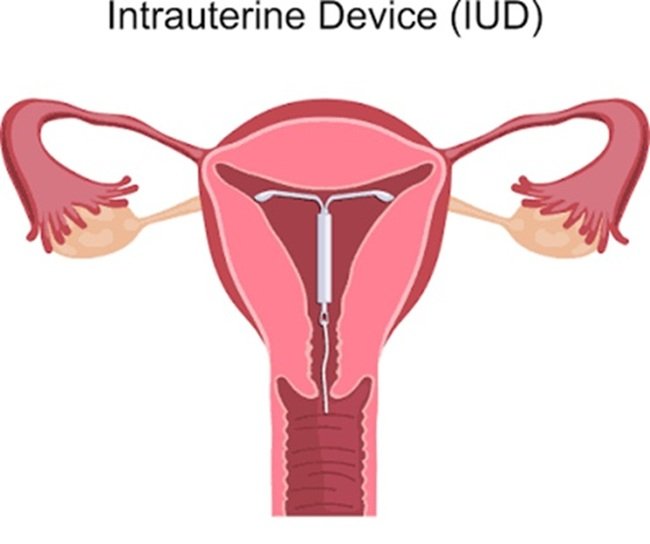
Intrauterine device (IUD) is a small device made of plastic and/or metal that is inserted into the uterus (womb) to prevent pregnancy. It can also be referred to as intrauterine contraceptive (IUC).
Planned Parenthood also describes an IUD as a small piece of flexible plastic shaped like a T. According to the non-profit organisation, IUD is long-term, reversible, and one of the most effective birth control methods out there.
According to the World Health Organisation (WHO), there are two main types of IUDs: copper-bearing IUDs, which are non-hormonal, and levonorgestrel-releasing IUDs, which are hormonal. Both are among the most effective reversible contraceptive methods, with fewer than one pregnancy occurring per 100 women during the first year of use.
The WHO notes that, depending on the product, a copper IUD can prevent pregnancy for 10 to 12 years, while hormonal IUDs provide protection for three to eight years. It noted that fertility returns almost immediately after the device is removed, allowing women to conceive if they choose.
However, it emphasises that IUDs do not protect against sexually transmitted infections (STIs), including Human Immunodeficiency Virus (HIV). It therefore recommends the use of condoms for individuals at risk of exposure to STIs.
It noted that a copper IUD can be used as an effective form of emergency contraception if inserted within five days of unprotected sexual intercourse.
Can an IUD really affect menstruation?
According to a consultant obstetrician and gynaecologist based in Lagos, David Edo-Edokpolor, there is a direct relationship between the type of IUD a woman uses and the changes she may experience during menstruation.
The type of IUD, he said, determines the nature of the menstrual changes. “Not all IUDs affect menstruation in the same way,” he said.
He disclosed that copper IUDs are more likely to increase menstrual bleeding and menstrual pain, while hormonal IUDs generally reduce both.
Understanding this difference, he said, is important for women considering the contraceptive method.
Why does the copper IUD cause heavier periods?
Mr Edo-Edokpolor explained that copper IUDs work by causing local inflammatory changes within the lining of the uterus.
The device affects substances known as prostaglandins in the endometrium, triggering inflammation that can increase both menstrual bleeding and menstrual pain.
For many women, these changes are most noticeable during the first three to six months after insertion.
While the symptoms improve with time for some users, others continue to experience prolonged or unusually heavy periods. The severity according to him varies from one woman to another.
When heavy menstrual bleeding becomes a health concern
Heavy menstrual bleeding is more than an inconvenience.
According to Mr Edo-Edokpolor, excessive blood loss can eventually lead to anaemia, a condition in which the body lacks enough healthy red blood cells to carry adequate oxygen.
That was exactly what happened to Maryanne. Her monthly bleeding became so excessive that her blood level dropped.
Women who experience unusually heavy menstrual bleeding while using a copper IUD, the gynaecologist advised, should not simply endure it.
Instead, they should seek medical attention. “They should have their Packed Cell Volume (PCV) or haemoglobin level checked,” he said. “Depending on the results, they may need haematinics such as iron supplements or blood tonics.”
Clinical studies, he added, show that as many as 15 per cent of women discontinue using copper IUDs because of heavy menstrual bleeding and pain.
Do hormonal IUDs cause the same problem?
Unlike the copper IUD, hormonal IUDs often produce the opposite effect. Rather than increasing menstrual bleeding, they usually make periods lighter, shorter and less painful.
Some women even stop menstruating altogether after prolonged use.
Mr Edo-Edokpolor explained that hormonal IUDs contain levonorgestrel, a form of progesterone.
The hormone works by thinning the lining of the uterus and thickening cervical mucus, making pregnancy unlikely while also reducing menstrual bleeding.
He dismissed a common misconception that hormonal IUDs increase blood pressure. “The hormone in hormonal IUDs is progesterone, not oestrogen,” he explained. “It is oestrogen that is associated with elevated blood pressure, not progesterone.
“What causes hypertension is combined oral contraceptives (OCOs) because they contain oestrogen. Examples of hormonal IUDs include Mirena, Kyleena, Liletta and Skyla.”
Cost keeps many women away
According to the doctor, despite their benefits in reducing menstrual bleeding, hormonal IUDs remain out of reach for many Nigerian women. “The only drawback is the cost,” Mr Edo-Edokpolor said.
He noted that a Mirena hormonal IUD costs well over ₦100,000, making it unaffordable for many women, including those seeking care in private hospitals.
The high price means that many women continue to choose the cheaper copper IUD, even when they experience menstrual side effects.
Managing heavy menstrual bleeding
Mr Edo-Edokpolor stressed that women experiencing heavy periods while using a copper IUD do not necessarily have to remove the device immediately.
Several medications can help reduce menstrual bleeding while allowing them to continue using the contraceptive safely.
He said healthcare providers may prescribe iron supplements where necessary and monitor blood levels to prevent or treat anaemia.
He urged women experiencing persistent heavy bleeding, severe pain or symptoms of anaemia to seek medical attention rather than self-medicate or silently endure the symptoms.
IUD and infection
According to a global handbook for providers, the risk of pelvic infection following IUD insertion is highest during the first 20 days after insertion but remains low.
Experts recommend the use of proper aseptic techniques during insertion.
Mr Edo-Edokpolor advises STI risk assessment before inserting an IUD, particularly for women with multiple sexual partners or who are at high risk of sexually transmitted infections (STIs)
“Infection risks can also be significantly reduced if the method is offered only to women who do have multiple sexual partners and women whose partners/husbands do not have multiple partners.”
Separating facts from fear
Stories like Mrs Okeke’s often travel quickly among women, shaping perceptions about family planning.
While her experience was real and deeply distressing, experts caution that not every woman will respond to an IUD in the same way.
The type of device matters. A copper IUD may increase menstrual bleeding and pain, while a hormonal IUD is more likely to reduce them.
For Mrs Okeke, understanding that difference came too late. “I suffered because I was afraid of getting pregnant,” she said.
Today, she hopes other women will receive adequate counselling before choosing an IUD so they understand how it may affect their menstrual cycle, recognise when side effects require medical attention and know that they have options if one method does not suit their bodies.
“When women are equipped with accurate information rather than rumours or fear, they are better able to make decisions that protect not only their reproductive health but also their dignity and quality of life,” Mr Edo-Edokpolor said.
Author
-
Christiana Alabi-Akande is an award-winning development journalist with over a decade of experience at Daily Trust. She’s a skilled storyteller, passionate about humanitarian service and driving impactful change. She’s also a versatile media professional with proficiency in English, Hausa, and Yoruba. Alabi-Akande currently works as Managing Editor at DevReporting.
Source: Development Reporting