








From Lagos to Ilorin and Osogbo to Zaria, tertiary institutions’ students across Nigeria are subjected to exploitation by landlords and estate agents. A DevReporting report reveals how inadequate campus accommodation has created a booming private rental market that preys on students’ desperation.
By Our Reporters
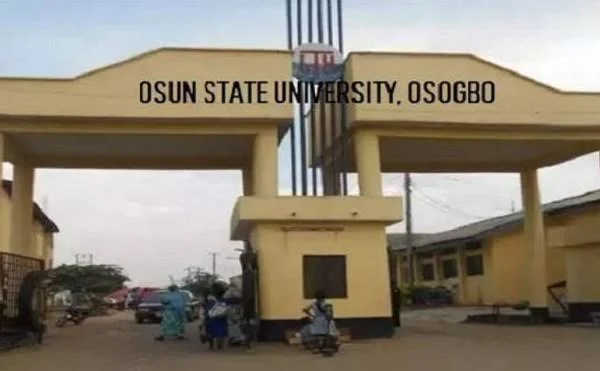
Earlier last year, when Sayo Akinleye gained admission to study at the Osun State University (UNIOSUN) after three attempts, his family thought the hardest part was over. They set aside ₦250,000 for accommodation near campus in Osogbo, Osun capital. Instead, housing agents demanded up to ₦750,000 for a single room, insisting the price was higher because he was a student.
Like him, many other students of UNIOSUN face the same challenges as a result of inadequate campus accommodation and weak regulation across the university’s six campuses in Osogbo, Ikire, Ifetedo, Okuku, Ipetu-Ijesha, and Ejigbo.
When a DevReporting reporter posed as both a student and an artisan to make enquiries for the same apartment in Oke-Baale area of Osogbo, the difference was striking: “₦750,000 for students, ₦250,000 for artisans, same room, same conditions.” To further exploit the students, many long-term residents are now being pushed out of their homes as landlords prefer student-tenants who pay higher rents.
Related Posts:
- FULL TEXT: Dapo Olorunyomi’s lecture at Ajayi Crowther University on Nigerian journalism
- From Borno to Oriire: 2,573 abducted in 31 violent Nigerian school attacks over 12 years
- SPECIAL REPORT: Despite billions spent, Lagos’ ‘low-cost’ housing excludes 70% of residents
- Unsafe, Unprotected: Oyo schoolgirls suffer in silence over lack of menstrual facilities
Kabiru Adekilekun, who has lived in Oke-Baale for five years, told DevReporting he was given three months’ notice to quit his rented apartment.
“The landlord said students pay better,” he recalled, as he continues to search for a new home for his family of four in an already constrained rental market.
Another resident, who wished to remain anonymous, said the development has bred silent hostility between locals and students.
“Whenever I see a UNIOSUN student, I feel angry because I have to leave my home simply because he goes to school here,” the resident said.
While the student union leaders of the institution said they have written letters to Governor Ademola Adeleke for his intervention, as well as to the university management, the housing challenges persist.
Meanwhile, the situation is not limited to UNIOSUN, as students of Osun State Polytechnic in Iree, share similar frustrations. Many described the apartments offered to them as sub-par yet priced like those in prime areas of Osogbo.
“They charge us the same amount you’d pay in a highbrow part of Osogbo, but this is Iree, a small town where electricity and water are not even guaranteed,” a student said. “They claim prices went up because of inflation, but there’s nothing new or improved about these houses.”
According to DevReporting findings, many of the apartments in the community are rented out to students from ₦500,000 above and they lack basic fittings such as tiles, wardrobes, or proper plumbing.
Growing threat to higher education
For millions of Nigerian students, gaining admission into a university, polytechnic, or college of education is only the beginning of another daunting challenge.
Across the country, an acute shortage of student accommodation has evolved into one of the most pressing yet underreported crises confronting higher education. What should be a basic welfare provision has become a daily struggle, forcing many students into overcrowded hostels, unsafe neighbourhoods, and increasingly unaffordable rental markets.
According to a 2022 study titled “A Review on Students’ Housing in Nigerian Universities” and published in the LAUTECH Journal of Civil and Environmental Studies, student housing was once a cornerstone of Nigeria’s university system. While the tertiary education system has witnessed remarkable growth in student enrolment over the past two decades, investment in student housing has failed to keep pace with this expansion.
Hostel shortage fuels off-campus housing crisis
In Obafemi Awolowo University (OAU), Ile-Ife, for instance, there are only around 7,200 bedspaces on campus to cater for over 30,000 students. Consequently, more than 70 per cent of students are compelled to seek accommodation outside their campuses.
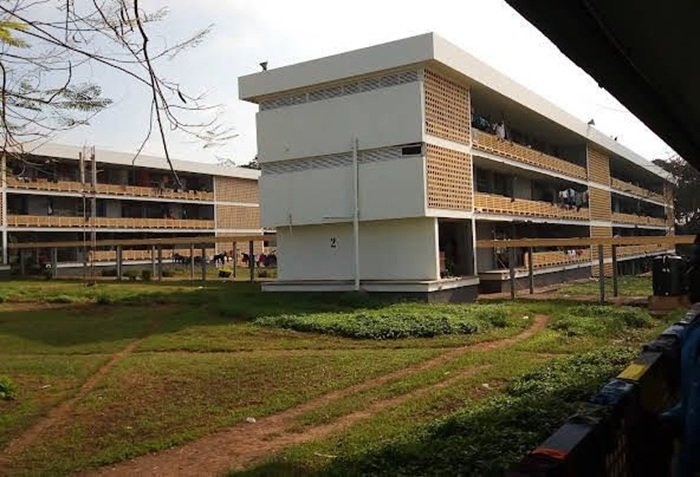
In many cases, hostels designed to accommodate four students now house eight or more. Basic amenities such as water supply, electricity, sanitation facilities, and security are often stretched beyond capacity.
Students who fail to secure campus accommodation are left to compete in volatile private rental markets surrounding universities, where annual rents have increased significantly due to high demand, inflation, and limited supply.
For students, the implications are profound. Those living off campus often spend time commuting daily, depending on the distance, exposing themselves to transportation challenges, insecurity, and additional financial burdens. Female students are particularly vulnerable to harassment, exploitation, and gender-based violence while searching for or residing in off-campus accommodation.
An OAU student who simply identified herself as Mercy, explained that all the house agents she had dealt with are unreliable.
“They are just always after their money,” she said. In her first year, she was unable to secure a bed-space on campus, hence she sought the help of an agent off-campus.
“The places they were showing me were very terrible despite collecting inspection fees nonetheless. Each agent charges an average of ₦2,000 as an inspection fee before I was eventually able to secure one.”
Aside from house agents extortion, DevReporting gathered that landlords in university communities frequently demand one or two years’ rent upfront, alongside agency fees, legal charges, and caution deposits. In fact, accommodation has now become the single largest educational expense after school fees.
Reacting to the extortion allegations, Akinlolu Akanbi, a real estate agent in Ile-Ife, described complaints about the conduct of agents as valid.
“For things like legal fees, caution fees, and service charges, the agent has nothing to do with them, but only with their agency fee,” he mentioned. “It is up to the person getting the apartment to verify those payments.”
A local agent in Iree, who requested anonymity, defended the practice, saying the spike in rent was due to increased demand from students.
“Indigenes will not pay that much,” he said. “So, we balance it with what students pay. Some of them don’t even argue; they just pay immediately.”
Recognising the growing challenge, the Federal Government announced renewed efforts to expand student housing through public-private partnerships. Recent initiatives include plans to invest approximately ₦250 billion in hostel development across tertiary institutions, with new 500-bed hostels proposed for dozens of campuses and additional projects under the Renewed Hope Student Housing Programme.
While these interventions represent a positive step, they are unlikely to bridge the country’s enormous accommodation deficit without sustained investment and transparent implementation.
Yearly increment in private hostels
For many students at the University of Ilorin, securing accommodation off campus has become an annual battle against rising rents, arbitrary charges, and the unchecked activities of hostel agents.
Akorede Comfort, who lives in a private hostel, said the cost of accommodation has increased every year without any corresponding improvement in facilities or services. According to her, the increases are determined by the hostel association and are non-negotiable.
“I paid ₦130,000 in my first year. By my second year, it increased to ₦178,000, and now we’re being asked to pay ₦197,000 for my third year. There has been no improvement in the hostel and no explanation for the increase,” she said.
For Sakirat Adesina, a Linguistics and Nigerian Languages student, the challenge extended beyond rising rent to alleged harassment by a hostel agent.
Sakirat explained that she initially lived with her older sisters, who were final-year students, and remained in the apartment after they graduated. However, when it was time to renew the tenancy, the agent demanded that she pay a fresh agency fee in addition to the increased rent.
“I told him I wasn’t going to pay another agency fee and that I would rather move out,” she recalled.
Although her rent was not due to expire until February this year, Sakirat said the agent instructed her to vacate the apartment in December last year. When she returned from the semester break, she found that the entrance to her room had been secured with another padlock.
“When I came back after the holiday, I discovered that he had locked the room. One of my sisters had to intervene before he eventually gave me until January 30 to move out.”
She temporarily moved into a friend’s hostel before eventually securing another apartment.
For many students at the University of Ibadan (UI), securing accommodation becomes increasingly difficult after their first year, forcing many to rely on relatives, friends, or expensive off-campus housing.
Anthony Oyenuga, a 400-level medical student said the accommodation challenge became more pronounced during his clinical training. He explained that medical students undertake their clinical postings at the University College Hospital (UCH), where accommodation is provided through the Alexander Brown Hall. However, the available rooms fall far short of demand.
“They gave all the female students accommodation, but only a few male students got bed spaces,” he said.
As a result, many students are forced to look for accommodation outside the hospital or commute daily from the University of Ibadan campus. Oyenuga is among those who make the journey between UI and UCH every day, spending about ₦800 on transportation.
Between bedbugs, privacy and high cost of living off campus
At the University of Lagos (UNILAG), the decision to live off campus is influenced by a combination of factors, including the condition of hostel facilities, limited bed spaces, privacy, and personal convenience.
For Raheem Ganiyu, a 100-level student, the choice to commute daily from Mushin rather than live on campus was an easy one. He said that videos shared by his coursemates showing bedbug-infested hostel rooms convinced him that campus accommodation was not an option.
“The sight of bedbugs makes my skin crawl,” he said. “I’d rather endure the traffic and leave home very early than stay on campus, even during overnight reading sessions for examinations.”
Raheem secured a newly built apartment for ₦800,000 per year, sparing him the cost of repairs. Beyond the annual rent, he also paid agency fees and a refundable ₦50,000 damage deposit.
A different perspective comes from Zeus, a 500-level Mechanical Engineering student, who values privacy above all else. Living in Bariga, he says off-campus accommodation offers greater comfort, independence and better facilities than the university hostels.
Unlike many students who struggle to secure accommodation, some students at Yaba College of Technology (YabaTech) have found practical alternatives by living with family members.
Sumonu Joseph, who is staying with his brother near the campus said because he does not rent independently, he has avoided the common challenges associated with landlords and accommodation agents.
In Ahmadu Bello University (ABU), Dotun Adeyanju said he opted for private accommodation because he was dissatisfied with the condition of the university hostels. However, his off-campus experience has been far from ideal.
Also, Khawlah Olagunju cited poor sanitary conditions as the primary reason she rejected campus accommodation.
According to her, an entire hostel floor often shares a single toilet, which is frequently left dirty because of poor maintenance. “Sometimes students avoid using the toilets throughout the night because they are so unhygienic.”
Universities acknowledge accommodation deficit
The experiences shared by students across Nigeria reflect a challenge that university administrators say has become a reality across public tertiary institutions, where hostel capacity has failed to keep pace with rising student enrolment.
The Dean of Student Affairs at the University of Ilorin, Alex Akanmu told the Guardian Newspaper that no Nigerian public university currently has the capacity to accommodate more than 25 to 30 per cent of its students.
“”The housing problem is a reality in Nigerian public universities,” he said. “At Unilorin, we have not been able to accommodate 30 per cent of our students. That means about 70 per cent live off campus. It’s a major problem.”
According to Mr Akanmu, the challenge is not a shortage of land but inadequate funding and policy support. He said the university operates a public-private partnership (PPP) model for hostel development, yet it still accommodates fewer than 30 per cent of its students because investment has not kept pace with demand.
He identified greater private sector participation, alumni support and policy reforms as key to addressing the crisis. While noting that more than 42 private investors had expressed interest in developing hostels at the university, he stressed that the government alone could not solve the problem.
Mr Akanmu added that most students and their parents would prefer on-campus accommodation because of security, easier access to academic facilities and greater convenience. However, limited hostel capacity leaves the majority with no option but to seek accommodation off campus, where they often face high rents, poor living conditions and insecurity.
Academics propose roadmap to end accommodation crisis
Academics have warned that Nigeria’s student accommodation crisis has become a threat to higher education, saying years of under-investment in campus housing have left students vulnerable to exploitation in poorly regulated private rental markets.
The National President of the Congress of University Academics (CONUA), Niyi Sunmonu, an associate professor of Atmospheric Physics said the accommodation crisis goes to the heart of teaching and learning in Nigerian universities, noting that the rising cost of off-campus accommodation has become a significant burden for students and their families.
According to him, arbitrary rent increases, excessive agency fees and other exploitative practices are making higher education increasingly unaffordable for many Nigerians. He said the situation reflects years of under-investment in student housing despite the rapid growth in student enrolment, leaving many students with little choice but to rely on inadequately regulated private rental markets.
“As a union, we believe education should expand opportunities for our teeming population,” Mr Sunmonu said. “However, high accommodation costs, coupled with long commuting distances in some cases and unsafe living conditions in many others, undermine students’ welfare and academic performance.”
He urged governments to increase investment in student housing to bridge the accommodation deficit, while calling on university managements to expand hostel capacity through transparent public-private partnerships, adopt fair hostel allocation systems and play a more active role in regulating access to off-campus accommodation.
Mr Sunmonu also urged regulatory agencies to protect students from exploitative practices by estate agents. He recommended creating verified databases of approved hostels, establishing accessible complaints and mediation mechanisms, strengthening engagement with host communities, and providing incentives for private investors to develop affordable student accommodation.
“Ultimately, investment in student accommodation is an investment in education quality and national development,” he said.
Efforts to bridge the accommodation gap
Amid the growing accommodation deficit, some universities have already begun taking steps to expand hostel capacity.
At the University of Lagos (UNILAG), the management in April commenced the construction of a 170-bed-space hostel for medical students at the College of Medicine, Idi-Araba, under the Tertiary Education Trust Fund (TETFund)’s Special High Impact Projects.
The Vice Chancellor, Folasade Ogunsola, a professor of Medical Microbiology said the project was a strategic investment aimed at strengthening infrastructure for the training of medical professionals.
She noted that the additional hostel would improve accommodation for students and support the university’s goal of training up to 1,000 medical doctors annually.
However, with completion expected within 24 months, the project represents only a fraction of the accommodation needed across Nigeria’s expanding tertiary education system.
Similar efforts are also underway at other public institutions. In May, the Minister of Education, Tunji Alausa, flagged off major hostel development projects at Lagos State University (LASU) and Yaba College of Technology (YABATECH) as part of the Federal Government’s drive to address student accommodation shortages through TETFund-backed infrastructure interventions.
At LASU, the minister joined Vice Chancellor, Ibironke Olatunji-Bello, a professor, to lay the foundation for a new student hostel aimed at easing pressure on campus accommodation.
He also inaugurated the construction of a 1,500-bed hostel at YabaTech, a public-private partnership project expected to expand accommodation capacity and improve students’ welfare.
While these projects signal growing investment in student housing, experts say sustained funding and wider implementation will be required to significantly reduce the accommodation deficit across Nigeria’s tertiary institutions.
Way forward
As complaints about rising rents and the conduct of landlords and agents continue to mount, a legal practitioner, Sideeq Rabiu, urged students to familiarise themselves with their rights under the law.
Speaking with DevReporting, Mr Rabiu, Principal Partner at Lexsid Attorneys, explained that the Lagos State Tenancy Law 2011 provides a legal framework for regulating residential and commercial tenancy relationships, including rent payments, notice periods, and dispute resolution.
Mr Rabiu noted, however, that the law does not apply uniformly across Lagos State and other states where students are facing similar challenges.
He explained that while tenancy agreements may modify certain provisions of the law, particularly notice periods, such modifications must still comply with mandatory statutory requirements.
Mr Rabiu noted that landlords have the right to receive rent as stipulated in the tenancy agreement, but they also have corresponding obligations. These include maintaining the property in a habitable condition, providing a written tenancy agreement that clearly sets out the terms of the lease, and following due process when seeking to increase rent or terminate a tenancy.
Tenants, on the other hand, are entitled to quiet enjoyment of the property, protection against arbitrary rent increases, and security of tenure. They are also expected to fulfil their obligations by paying rent promptly, maintaining the property, and complying with the terms of their tenancy agreements, including any restrictions on subletting or making structural alterations.
The legal practitioner also mentioned that “agents are required to act transparently, comply with legal standards, and maintain proper records. Where they engage in misconduct, they may be held legally accountable.”
On the increasing number of disputes arising from rent hikes, eviction threats and disagreements over tenancy terms, Mr Rabiu encouraged parties to explore alternative dispute resolution mechanisms before resorting to litigation.
“Parties are encouraged to use mediation or arbitration to resolve disputes amicably. Where these efforts fail, the courts have the authority to intervene. They can assess the reasonableness of rent increases, enforce tenancy rights, provide remedies for unlawful eviction, and determine liabilities where rent obligations have not been met.”
He stressed that a better understanding of tenancy laws by landlords, tenants and estate agents would not only reduce conflicts but also promote fairness, accountability and greater confidence in Nigeria’s rental housing market.
Report by Adedoyin Oguntade, Ibrahim Awotunde, Moryam Bakare & Olabisi Sulaimon
Source: Development Reporting